Top 15 Traditional Education Advantages For Modern Students
Jun 08, 2026
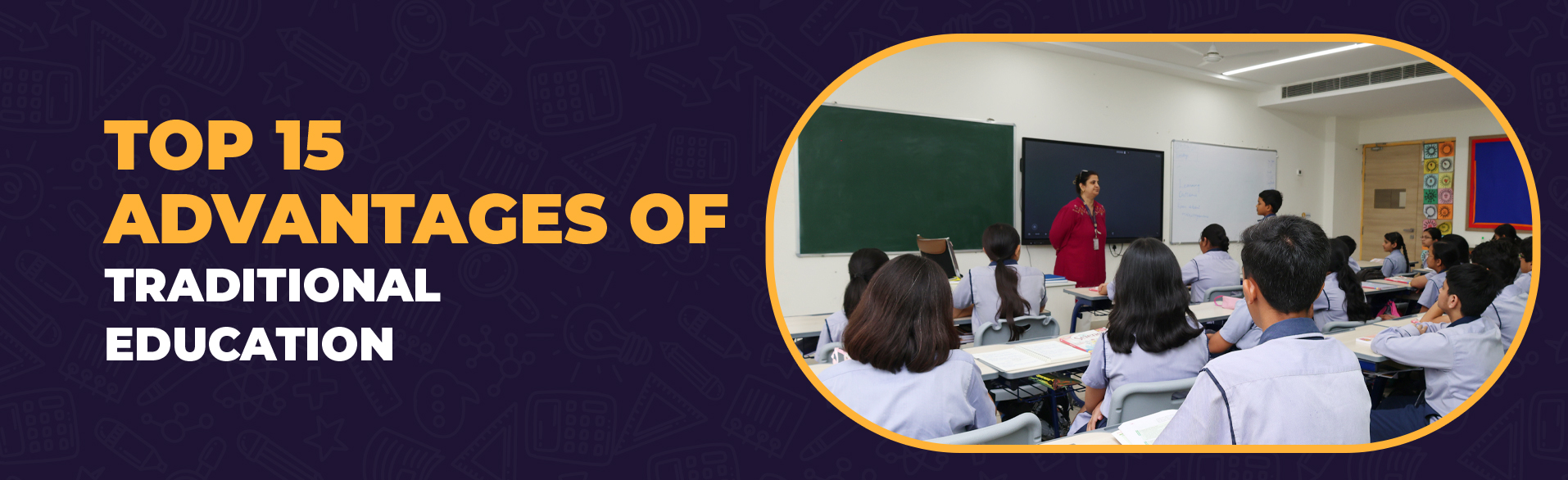
Many modern parents assume giving a child an expensive tablet automatically solves every learning problem. They view physical textbooks and standard chalkboards as outdated tools from a forgotten era. However, abandoning structured classroom methods completely ignores how the human brain actually retains deep information. The core traditional education advantages exist because children desperately require human connection, not just a glowing digital screen, to understand complex subjects fully.
Understanding these benefits helps parents realize why premium schools still rely heavily on physical classrooms. The proven methods of face-to-face instruction continue to build stronger academic foundations than any isolated educational software ever could.
1.The Immediate Power Of Face-To-Face Instruction
Staring at a pre-recorded lecture video never replaces the energy of a live teacher. The primary traditional education benefits start with instant visual feedback during a difficult lesson. A trained educator scans the classroom, notices exactly who looks confused, and immediately changes their teaching approach on the spot.
This rapid physical adjustment is utterly impossible through a computer monitor. A live teacher can pause a complex math equation, draw a completely new diagram, and ask specific students direct questions. This immediate intervention prevents a young learner from falling hopelessly behind before the next chapter even begins.
2. Structured Routine And Daily Discipline
Children thrive heavily under predictable daily schedules. A physical school forces a student to wake up, dress appropriately, and arrive at their desk before the morning bell rings. This strict external routine builds deep internal discipline that lasts an entire lifetime.
Online learning often allows students to watch videos from their beds while eating snacks. That extreme comfort ruins their ability to focus seriously on difficult tasks. Walking into a physical building mentally signals to the student that it is officially time to work.
3. The Traditional Learning Advantages Of Peer Interaction
You cannot learn empathy by typing in a chat box. The heavy traditional learning advantages focus heavily on forced daily socialization. Students must physically negotiate shared space, handle minor playground disagreements, and work together on massive group projects.
This constant physical interaction builds heavy emotional resilience over the academic year. When a student defends their project idea in front of a live group, they learn exactly how to handle immediate, real-world criticism. A digital learning portal simply cannot replicate the high-stakes pressure of speaking in front of thirty watching peers.
4. Immediate Access To Physical Resources
A proper campus provides massive physical resources that a typical house never holds. Students need immediate access to heavy microscopes, dangerous chemicals for science experiments, and massive libraries filled with rare books. These physical tools transform a flat theoretical concept into a memorable, hands-on physical reality.
Reading about a chemical reaction in a digital PDF is boring. Watching a physical liquid change color and start smoking inside a glass beaker locks that specific memory into a student's brain forever.
5. Eliminating Severe Digital Distractions
A student studying on a laptop is constantly fighting the massive urge to open a new tab. Social media, video games, and incoming text messages constantly shatter their fragile academic focus. The traditional schooling advantages include completely removing these digital temptations from the immediate learning environment.
When a teacher asks the class to open a physical paperback book, the focus remains entirely on the printed words. There are no flashing notifications to pull their eyes away. This sustained, unbroken concentration builds the deep mental stamina required to pass difficult final board exams.
6. The Value Of Traditional Methods In Teaching
Flashy new educational trends appear and vanish every single year. The core traditional methods in teaching survive specifically because they actually work. Rote memorization often gets a terrible reputation, but young brains absolutely must memorize basic multiplication tables before they can solve advanced algebra.
Teachers use classic call-and-response methods, physical writing drills, and heavy dictation to cement foundational knowledge deeply into a child's memory. These physical actions wire the brain differently than simply tapping multiple-choice answers on a smooth glass screen.
7. Immediate Peer Motivation And Healthy Competition
Sitting alone in a quiet bedroom usually destroys a student's natural academic drive. Putting thirty students inside the same room automatically creates a powerful atmosphere of healthy competition. When a student sees their desk mate working incredibly hard, they naturally push themselves to match that exact effort.
This silent peer pressure acts as a massive psychological engine. A teacher hanging the best physical art projects on the classroom wall gives every single student a visible, physical goal to strive for the following week.
8. Physical Movement And Dedicated Athletic Facilities
Human bodies are simply not designed to sit frozen in a single chair for eight hours. Traditional schooling builds mandatory physical movement directly into the daily schedule. Moving between different classrooms, carrying heavy books, and participating in physical education classes keeps the blood pumping efficiently.
Full-sized athletic grounds, squash courts, and gymnastics arenas provide the exact space needed to burn off heavy anxiety. This heavy physical exhaustion allows the student to sit calmly and focus when they finally return to their academic desk.
9. Developing Deep Respect For Adult Authority
A digital learning program treats the student like an independent consumer. A physical classroom treats them like a learner who must respect established authority. Learning how to speak politely to a strict teacher prepares the child for handling future bosses and difficult university professors.
They learn exactly when to stay quiet, how to ask permission formally, and why following shared rules benefits the entire group. This deep respect for hierarchy prevents severe behavioral issues from ruining their professional adult lives.
10. The Unmatched Value Of Extracurricular Clubs
A school is much more than just a collection of testing rooms. The physical campus hosts debate teams, drama clubs, and massive science fairs after the final bell rings. These dedicated physical spaces allow students to discover hidden talents that standard textbooks completely ignore.
A quiet student might discover they possess a massive talent for stage acting only because the school required them to audition for the annual winter play. These sudden discoveries shape their entire future career trajectory.
11. Celebrating Collective Achievements Visually
Schools celebrate academic success loudly and publicly. Walking across a physical wooden stage to receive a heavy metal trophy creates a permanent core memory. The entire student body clapping together provides a massive rush of psychological validation.
A generic digital certificate sent to an email inbox feels entirely hollow by comparison. The physical weight of the award and the noise of the crowd prove to the child that their hard work is actually recognized by their community.
12. Instant And Unfiltered Emotional Support
Teachers act as crucial emotional safety nets during turbulent family times. An experienced educator can easily spot a student who looks unusually exhausted or quietly depressed during morning assembly. They pull the child aside physically and offer immediate, genuine human comfort.
Software cannot detect quiet human sadness. The physical presence of a caring adult often saves a struggling student from completely abandoning their academic workload during a tough personal crisis.
13. The Enduring Traditional Education Advantages For Exams
The most demanding exams in the country still require physical handwriting and strict time management. Sitting in a quiet exam hall completely alone builds unique psychological pressure. Experiencing the traditional education advantages daily ensures the student does not panic when the invigilator finally hands out the physical exam paper.
They already know exactly how to manage their time, pace their writing speed, and handle the heavy silence of the room. This physical preparation dramatically reduces test anxiety when the final board results actually matter.
14. Creating Lifelong Human Networks
The people sitting next to you in a physical classroom often become your professional network thirty years later. Shared physical experiences, from surviving difficult exams together to eating lunch on the same playground bench, forge unbreakable human bonds.
These exact friendships eventually open massive doors in the adult corporate world. You cannot build that level of deep trust through isolated digital zoom calls.
15. Finding A Campus That Blends The Best Methods
Modern education should never reject proven classical methods just to look technologically advanced. The strongest academic foundations rely heavily on human connection, physical discipline, and structured daily routines. A proper campus leverages these exact classical strengths while quietly integrating modern tools only when they actually serve a clear purpose.
St. Xavier's High School in Sector 89 understands exactly how to strike this difficult balance. They combine highly structured academic rigor with state-of-the-art physical labs and global partnerships like the Trinity College pathway. Their faculty knows that real learning requires engagement, not just pressure, ensuring students leave the campus genuinely prepared for life outside the classroom.
```